Six Sigma Belt Comparison: Yellow vs Green vs Black Belt (Which Certification Is Right for You?)


This Six Sigma belt comparison breaks down the differences between Yellow Belt, Green Belt, Black Belt, and Master Black Belt certifications. If you’re wondering which Six Sigma belt is right for you, this guide explains the roles, skills, project scope, and career outcomes of each level and how each path fits into the broader Six Sigma certification journey.

The main difference between Yellow Belt, Green Belt, and Black Belt certifications is responsibility level. Yellow Belts support improvement projects, Green Belts lead departmental projects using DMAIC, and Black Belts lead cross-functional initiatives and drive organizational change. Master Black Belts coach teams and guide enterprise strategy.

Six Sigma Belts at a Glance

  • Yellow Belt: Entry-level. Supports improvement projects.

  • Green Belt: Leads small to medium projects. Applies DMAIC and data analysis.

  • Black Belt: Leads complex, cross-functional projects. Strategic impact.

  • Master Black Belt: Coaches Black Belts and drives enterprise-wide improvement.

BeltBest ForProject RoleTime Commitment
🟡 YellowNew to Six SigmaSupports improvement projectsLow
🟢 GreenProject leadersLeads departmental projectsMedium
BlackSenior leadersLeads cross-functional initiativesHigh
🔵 Master Black BeltCoaches & mentorsDrives organizational strategyVery High

Which Six Sigma Belt Is Right for Me?

Choose based on your role, experience, and how involved you want to be in improvement work:

  • Choose Yellow Belt if: You’re new to Lean Six Sigma and want foundational knowledge to support improvement projects.

  • Choose Green Belt if: You lead projects and analyze process performance within your team or department.

  • Choose Black Belt if: You lead cross-functional improvement initiatives and drive measurable operational change.

  • Choose Master Black Belt if: You coach teams, mentor Black Belts, and guide organizational strategy.

Six Sigma Belt Comparison Chart (Price, Time, Scope)

The table below compares Yellow, Green, Black, and Master Black Belt certifications by price, time commitment, scope, and professional development credits.


PRICE

COURSE LEVEL

COURSE FOCUS

AVG. COMPLETION TIME

CONTINUING ED

(PDUs/PDCs)

SELF-PACED ONLINE TRAINING

INDUSTRY APPROVED CERTIFICATION EXAM

SUMMARY

Yellow Belt

$299

Beginner

Learn the basic tools of Lean Six Sigma

1-2 Weeks (20 Hours)

21 PDUs | 21 PDCs

Become familiar with the methodology and basic tools of process improvement.

green belt

$399

Beginner - Intermediate

Utilize Lean SIx Sigma tools within project teams

3-5 Weeks (60 Hours)

60 PDUs | 45 PDCs

In-depth comprehensive training for applying Lean Six Sigma tools and concepts.

black belt

$499

Advanced

Management focused for leading Six Sigma projects & teams

4-7 Weeks (90 Hours)

91 PDUs | 45 PDCs

Manage teams and lead projects to successful completion utilizing advanced Six Sigma tools.

master black belt

$699

Expert

Become a Lean Six Sigma mentor & coach

4-7 Weeks (90 Hours)

96 PDUs | 45 PDCs

Master the discipline of Lean Six Sigma at the highest level and educate others.

Pricing Table WordPress Plugin

Each certification level builds on the one before it, increasing your technical skills, leadership responsibilities, and impact within process improvement initiatives.

Green Belt vs Black Belt: Key Differences

While both Lean Six Sigma Green Belts and Black Belts play important roles in process improvement, they differ in scope, responsibility, and depth of expertise.

A Green Belt typically leads small to medium improvement projects or supports larger initiatives under the guidance of a Black Belt. Green Belt training focuses on core Lean Six Sigma tools, the DMAIC methodology, data analysis, and practical problem-solving within a team or department.

A Black Belt, by contrast, leads complex, cross-functional improvement projects, applies advanced statistical methods, and drives strategic organizational change. Black Belts often hold leadership roles and dedicate a significant portion of their time to continuous improvement work.

Understanding these differences helps you choose the certification that best aligns with your career stage, responsibilities, and leadership goals.

AreaGreen BeltBlack Belt
Project ScopeDepartment-level projectsCross-functional initiatives
Tools DepthCore DMAIC + analysisAdvanced statistical methods
RoleProject lead / supportProgram leader / change agent
Time CommitmentPart-time improvement roleSignificant improvement responsibility

For a detailed breakdown of every Six Sigma belt level, visit our page on Six Sigma Belts.

Choosing the Right Lean Six Sigma Certification Body

Selecting the right certification provider is just as important as choosing the right belt level. The long-term credibility of your certification depends on who issues it. When comparing Lean Six Sigma providers, look for:

  • Recognition: Industry credibility, partnerships, and employer trust

  • Expert Instruction: Programs developed by a named, qualified expert (not anonymous content)

  • Transparent Pricing: No surprise fees for exams, retakes, or renewals

  • Flexible Format: Online, self-paced, and designed for working professionals

  • Credential Portability: Verification, shareable badges, and no renewal requirements (when possible)

Selecting a credible certification body helps ensure your credentials hold long-term value in the marketplace.

➡️ Want to compare providers side by side?
See our guide: Best Six Sigma Certification Courses (2026)


Comparing Leading Certification Bodies

While several organizations offer Lean Six Sigma certifications, the approach and credibility of each vary. The table below highlights key differences among three of the most recognized global bodies:

Comparing Leading Lean Six Sigma Certification Bodies
Snapshot of primary focus and key differences (ASQ, IASSC, CSSC).
Certification BodyPrimary FocusKey Differences
ASQ (American Society for Quality)Industry-respected and academically rigorousRequires project completion for advanced belts; Highly priced, training sold separately.
IASSC (International Association for Six Sigma Certification)Standardized global testing bodyExam-only certification; no training included, based in Cyprus.
CSSC (Council for Six Sigma Certification)Flexible and low-cost certificationOpen-book exams; simplified certification process; limited training depth

Each body offers its own advantages, depending on whether you value academic rigor, exam simplicity, or accessibility.

➡️ Looking for a U.S.-based, industry-trusted alternative?
SSGI certifications are developed by Dr. Barry Shore, a McGraw-Hill Award–winning professor with 40+ years in operations and process improvement, and trusted by organizations including Brigham and Women’s Hospital and the Baldrige Foundation.

Overview: How the Six Sigma Belts Build on Each Other

Six Sigma belts follow a clear progression. Yellow Belts learn foundational concepts and support projects. Green Belts lead departmental improvement initiatives. Black Belts lead cross-functional projects and drive strategic change. Master Black Belts mentor teams and guide enterprise-wide improvement.

Want a detailed breakdown of each level?
Read our complete guide: Six Sigma Certification Belts

Six Sigma Roles

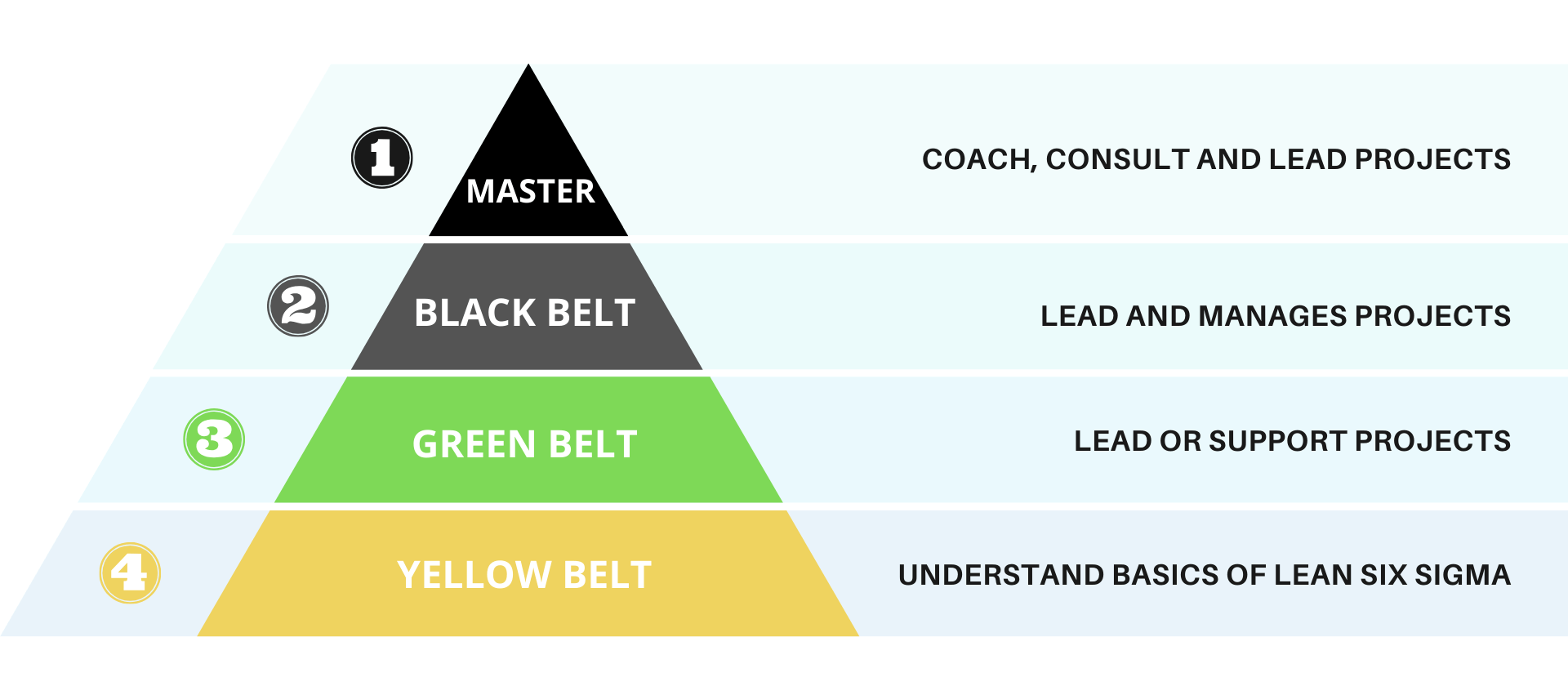
The diagram below shows how responsibilities increase from Yellow Belt to Master Black Belt.

Six Sigma belt roles pyramid showing progression from Yellow Belt to Master Black Belt with increasing leadership and responsibility.

🟩 New to Lean Six Sigma?
Learn the fundamentals and discover how Lean and Six Sigma work together in our beginner’s guide: What Is Lean Six Sigma?

Six Sigma Salary Factors

Six Sigma salaries vary by belt level, experience, and the scope of improvement responsibility.

Six Sigma Salary Factors

Six Sigma Salary by Belt Level →

FAQs

What is the difference between Six Sigma Yellow Belt and Green Belt?

Yellow Belt covers foundational concepts and supports projects. Green Belts lead improvement projects, analyze data, and apply DMAIC methods within their department.

Is Six Sigma Black Belt worth it?

Yes. Black Belt is worth it for professionals leading cross-functional improvement initiatives, managing change, and driving measurable business impact. Black Belts often move into senior operations, quality, and transformation roles.

Can I skip Green Belt and go straight to Black Belt?

Some providers allow this, but most professionals benefit from completing Green Belt first to build hands-on experience with DMAIC and core tools before moving into advanced leadership roles.

Which Six Sigma belt pays the most?

Black Belts and Master Black Belts typically earn the highest salaries due to their leadership responsibility and strategic impact on operations.

Are Six Sigma certifications recognized by employers?

Yes. Employers value Six Sigma certifications when issued by reputable providers with industry recognition, experienced instructors, and real-world application.

Which Six Sigma belt should I get first?

Most professionals start with Green Belt because it provides hands-on project leadership skills and is widely recognized by employers. Yellow Belt is best for beginners who want foundational knowledge, while Black Belt is intended for those leading improvement work at a senior level.

What industries use Six Sigma the most?

Six Sigma is widely used in manufacturing, healthcare, logistics, supply chain, finance, technology, and government organizations.