How to Get Six Sigma Certification


Reviewed by Dr. Barry Shore
McGraw-Hill award-winning professor and Lean Six Sigma expert with 40+ years of experience.


Many professionals want to improve processes, advance their careers, and build stronger problem-solving skills. One of the most effective ways to do that is by earning a Six Sigma certification.

Six Sigma teaches professionals how to analyze processes, reduce defects, improve efficiency, and lead measurable business improvements across industries like manufacturing, healthcare, finance, and technology.

In this guide, you’ll learn how to get Six Sigma certified step-by-step, including certification levels, training requirements, costs, and timelines.

The process is simpler than most people expect.

How to Get Six Sigma Certified in 4 Steps

Follow these four steps to earn your Six Sigma certification and start building practical process improvement skills.

1

Choose Your Belt

Select the certification level that matches your experience and career goals.

2

Complete Training

Work through self-paced training covering DMAIC, Lean principles, and core tools.

3

Pass the Exam

Take the certification exam to demonstrate your understanding of Six Sigma concepts.

4

Apply Your Skills

Use Six Sigma tools in real projects to improve quality, efficiency, and results.

What Is Six Sigma Certification?

Six Sigma certification is a professional credential that demonstrates your ability to improve business processes using structured, data-driven methods.

Watch: Six Sigma Explained in 6 Minutes

Six Sigma professionals learn how to:

• Identify root causes of problems
• Analyze process data
• Reduce defects and waste
• Improve efficiency and customer satisfaction
• Lead improvement projects across organizations

The methodology most commonly used in Six Sigma projects is DMAIC, which stands for:

Define
Measure
Analyze
Improve
Control

Six Sigma certification programs train professionals to apply these tools in real business environments.

If you’re new to the methodology, start with our guide explaining What is Six Sigma?

Choose the Right Six Sigma Belt Level

Each certification level is designed for a different stage of your career.

Yellow Belt

Best for beginners

  • Focus: foundational knowledge
  • Typical role: team member / support role
  • Timeline: 1–2 weeks
  • Typical cost: $100–$500

Black Belt

Best for advanced leaders

  • Focus: advanced improvement leadership
  • Typical role: department / cross-functional leader
  • Timeline: 1–2 months
  • Typical cost: $1,000–$3,000+

Step 1: Choose Your Six Sigma Belt Level

Six Sigma certifications are structured into belt levels, known as Six Sigma Belts, similar to martial arts. Each level represents increasing expertise in process improvement.

Yellow Belt

A Lean Six Sigma Yellow Belt certification provides a foundational understanding of Lean Six Sigma concepts and tools.

Yellow Belts typically:

• understand basic improvement concepts
• support improvement projects
• participate on Six Sigma teams

This is often the entry point for beginners.


Green Belt

A Lean Six Sigma Green Belt certification is trained to lead improvement projects and analyze process data.

Green Belts typically:

• lead small to mid-sized improvement projects
• perform root cause analysis
• analyze process data and metrics
• work with cross-functional teams

Green Belt is one of the most widely recognized certifications in the job market.


Black Belt

A Lean Six Sigma Black Belt certification leads larger improvement initiatives and mentors Green Belts.

Black Belts typically:

• lead cross-department improvement projects
• use advanced statistical tools
• coach improvement teams
• help organizations drive operational excellence

Black Belt certification is usually pursued after gaining experience with Green Belt projects.

Step 2: Complete Six Sigma Training

After choosing a belt level, the next step is completing Six Sigma training.

Training programs typically teach:

• Lean Six Sigma principles
• DMAIC methodology
• root cause analysis tools
• statistical analysis basics
• process mapping techniques
• improvement project methods

Many modern programs are 100% online and self-paced, allowing professionals to complete training while working full time.

Training duration varies depending on the certification level.

Typical completion timelines:

Yellow Belt: 1–2 weeks
Green Belt: 2–5 weeks
Black Belt: 4–8 weeks

Step 3: Pass the Certification Exam

After completing the training, participants take a certification exam.

Most Six Sigma certification exams include:

• multiple choice questions
• problem-solving scenarios
• conceptual questions about Lean Six Sigma tools

Typical exam structure:

100 questions
2–3 hour time limit
passing score around 70–80%

Once the exam is passed, you receive your Six Sigma certification credential.

Step 4: Apply Six Sigma Skills in Real Projects

The most valuable part of Six Sigma certification is applying the methodology to real process improvement projects.

Certified professionals often lead projects that:

• reduce defects
• shorten cycle time
• improve service delivery
• lower operating costs
• increase customer satisfaction

These real-world applications are why Six Sigma certifications are valued by employers.

How to Choose the Right Six Sigma Certification Provider


Not all Six Sigma certification programs are created equal. While many providers offer similar certification labels, the quality of the training experience can vary significantly.

Choosing the right provider is less about the name of the certification body and more about how well the program prepares you to apply Six Sigma in real-world situations.


Look for Structured, In-Depth Training

Strong certification programs include comprehensive training that goes beyond exam preparation. Look for courses that cover real-world applications, practical examples, and step-by-step frameworks you can use on the job.


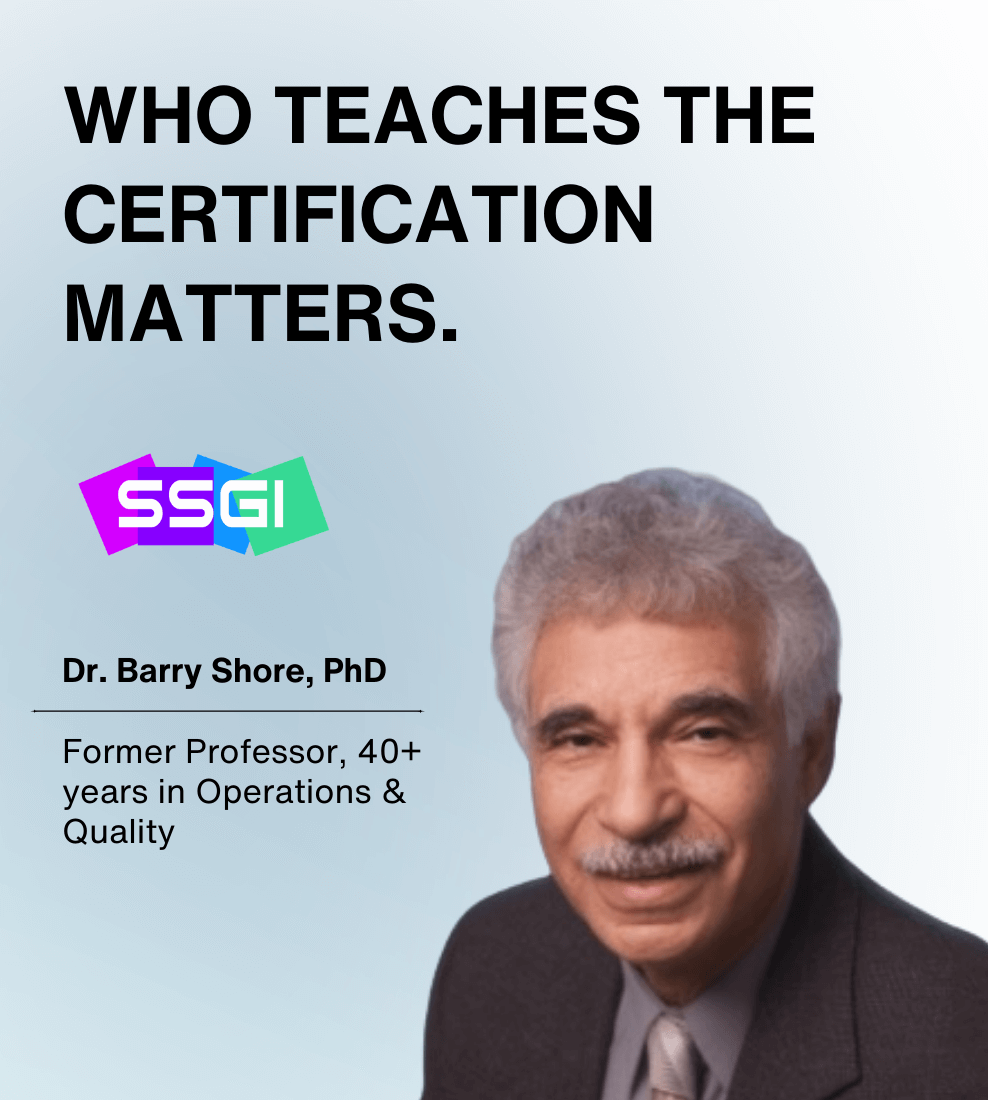
Evaluate Who Developed and Teaches the Program

The credibility of a program depends heavily on who created it. Training developed and taught by experienced professionals or recognized experts tends to provide more practical insight than generic content created by unnamed authors.


Prioritize Practical Application Over Exam-Only Certification

Six Sigma is an applied methodology. Programs focused only on passing an exam often leave professionals unprepared to lead actual improvement projects. The best certifications emphasize how to apply the tools, not just how to pass a test.


Check What’s Included with Certification

Some providers separate training, exams, and certification into different steps with additional fees. Others offer an integrated experience that includes training, assessment, and certification in one program. Understanding what’s included can help you compare overall value.


Look for Tools, Templates, and Support

Access to templates, project tools, and support resources can make a significant difference when applying Six Sigma concepts in your organization. These elements often matter more than the certification itself once you begin working on real projects.


Consider Employer Recognition and Practical Value

Employers typically care less about which organization issued the certification and more about whether you can apply Six Sigma methods effectively. Programs that emphasize real-world capability and structured learning tend to provide stronger long-term career value.


If you’re evaluating different options, focus on programs that combine expert-led training, practical tools, and a clear path to applying Six Sigma in real business environments.

How Long Does It Take to Get Six Sigma Certified?

The time required to earn a Six Sigma certification depends on the belt level, training format, and how quickly you move through the course.

Typical completion times by belt level

Yellow Belt
1–2 weeks
Green Belt
2–5 weeks
Black Belt
1–2 months

Many professionals complete certification while working full time because most online Six Sigma programs are self-paced.

How Much Does Six Sigma Certification Cost?

Six Sigma certification costs vary depending on the provider and certification level.

Typical price ranges include:

Yellow Belt: $100 – $500
Green Belt: $300 – $1,500
Black Belt: $1,000 – $3,000+

Some providers charge separate fees for training and certification exams, while others include everything in one program.

Do You Need a Project to Get Six Sigma Certified?

Some certification providers require a real improvement project to earn certification, while others do not.

For example:

Some organizations require project documentation and work experience.
Others allow certification through training and examination alone.

Many professionals choose programs that allow them to complete certification first and apply the methodology later in their job.

Learn more about – Six Sigma certification requirements.

Which Six Sigma Certification Is Best?

There are several organizations offering Six Sigma certification.

When choosing a provider, professionals should consider:

• course depth and quality
• instructor expertise
• certification recognition
• cost and exam fees
• renewal requirements

High-quality programs provide practical training, real examples, and expert instruction.

Check out our guide to – The Best Six Sigma Certifications

Lean Six Sigma Corporate training for teams by SSGI, Dr. Shore Expert in Six Sigma

Is Six Sigma Certification Worth It?

For many professionals, Six Sigma certification provides measurable career benefits.

Certified professionals often gain:

• stronger problem-solving skills
• improved analytical abilities
• leadership opportunities
• higher salary potential

Organizations value Six Sigma professionals because they bring structured methods for improving performance and solving complex operational problems.

Learn more about – Is Six Sigma certification is worth it?

Six Sigma belt salary comparison chart showing average yearly earnings for Yellow Belt, Green Belt, Black Belt, and Master Black Belt (2025)

Get Six Sigma Certified

If you’re ready to build practical process improvement skills and advance your career, earning a Six Sigma certification is a strong next step.

SSGI provides expert-developed Lean Six Sigma certification programs trusted by professionals and organizations worldwide.

Ready to get certified? Explore the programs below and choose the path that fits your career goals.

Each program is 100% online, self-paced, and includes the certification exam.

Frequently Asked Questions


How do you get Six Sigma certified?

To get Six Sigma certified, choose a certification level, complete a training program, pass the certification exam, and apply the methodology in real improvement projects.


Do you need experience for Six Sigma certification?

Most Yellow Belt and Green Belt certifications do not require prior experience. Some advanced certifications may require project experience.


How long does Six Sigma certification take?

Most professionals complete certification within 2 to 6 weeks, depending on the belt level and training schedule.


Is Lean Six Sigma the same as Six Sigma?

Lean Six Sigma combines Lean process improvement principles with Six Sigma statistical methods to reduce waste and improve quality.


What industries use Six Sigma certification?

Six Sigma is used across industries including manufacturing, healthcare, finance, logistics, technology, and government.


Which Six Sigma certification should I choose?

The best certification depends on your experience and career goals. Beginners typically start with Yellow Belt, while professionals leading projects often choose Green Belt. Black Belt is designed for advanced leadership roles.


Is Six Sigma certification recognized by employers?

Yes, Six Sigma certification is recognized across industries worldwide and is valued by employers seeking professionals with strong analytical and process improvement skills.


Can you get Six Sigma certified online?

Yes, many providers offer fully online Six Sigma certification programs that are self-paced and include training and certification exams.


How much do Six Sigma certified professionals make?

Six Sigma certified professionals often earn higher salaries due to their ability to improve processes and reduce costs. Salaries vary by role, experience, and certification level.


Is Six Sigma certification hard?

Six Sigma certification can be challenging, especially at higher levels, but most programs are designed to guide you step-by-step. With consistent study, most professionals successfully complete certification.