
Should You Get a Six Sigma Yellow Belt or Green Belt?

Not sure which Six Sigma certification is right for you? This guide compares Yellow Belt and Green Belt to help you choose the best fit for your experience and career goals.
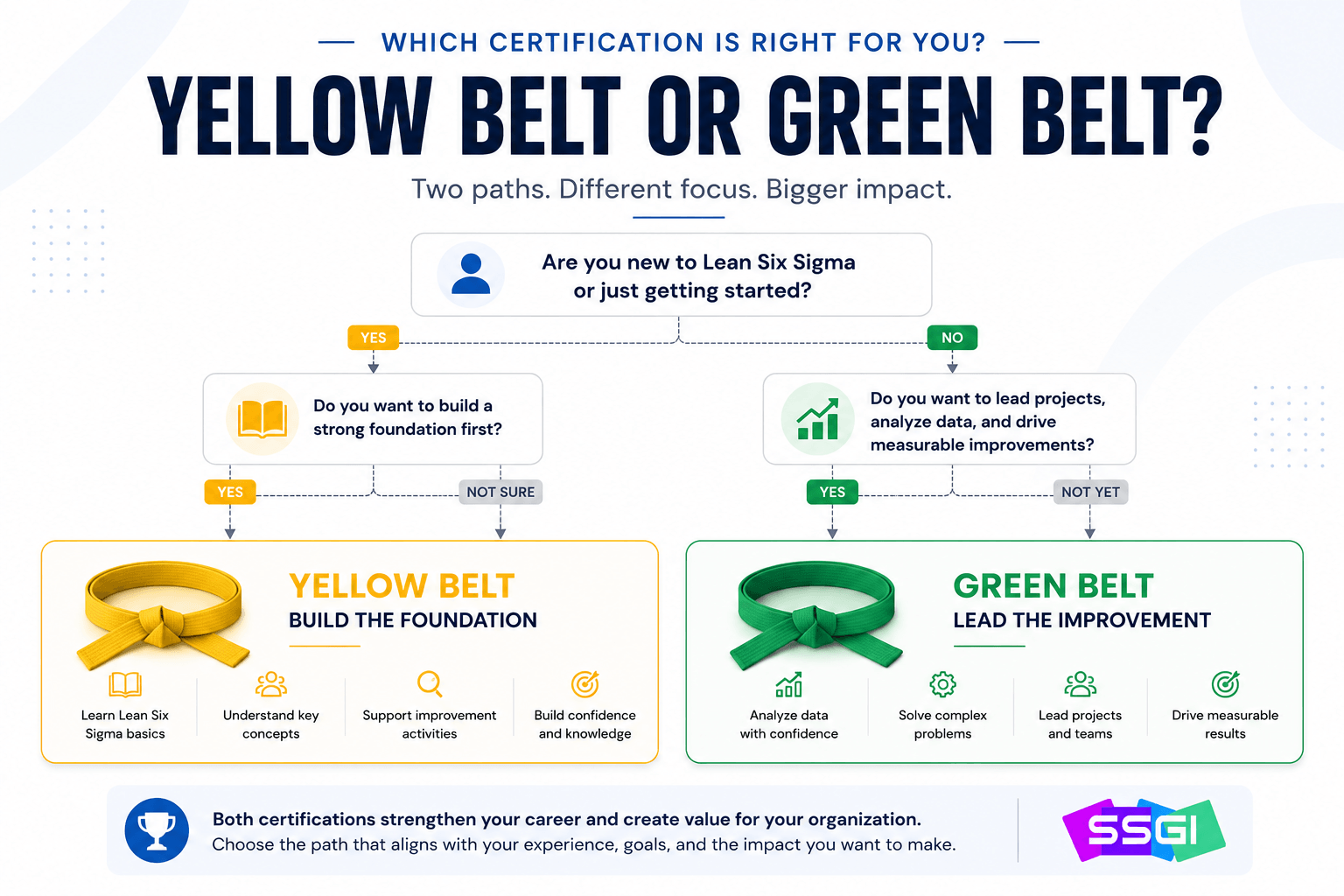

Decision tree comparing Six Sigma Yellow Belt and Green Belt certifications to help professionals choose the right certification based on experience and career goals.


Choosing your first Lean Six Sigma certification is one of the most common questions professionals ask.

Should you start with a Yellow Belt to build a strong foundation, or go directly to a Green Belt and develop more advanced problem-solving skills?

The right answer depends on your experience, career goals, and how you plan to apply Lean Six Sigma in your role.

This guide explains the differences between Yellow Belt and Green Belt certifications, who each certification is designed for, and how to determine which path best aligns with your professional goals.

Yellow Belt vs Green Belt Comparison: At a Glance

Yellow Belt and Green Belt differ primarily in training depth, project responsibility, analytical skills, and the role you're prepared to play in process improvement. Here's a quick side-by-side comparison.

Category Yellow Belt Green Belt
Best For Professionals new to Lean Six Sigma Professionals ready to apply Lean Six Sigma and lead improvement work
Experience Required None None, although workplace experience can be helpful
Typical Role Team member or project contributor Improvement project leader
Primary Focus Lean Six Sigma fundamentals and problem-solving concepts Applying Lean Six Sigma tools to analyze and improve processes
Data & Statistics Basic data analysis Intermediate statistical analysis
Project Responsibility Participates in and supports improvement projects Leads improvement projects
Time Commitment Lower Higher
Typical Next Step Green Belt Black Belt

Bottom line: Yellow Belt is generally the better starting point if you're new to Lean Six Sigma and want to build a foundation. Green Belt is typically the better choice if you're ready for deeper training and want to lead improvement projects.

Want to Compare All Six Sigma Belt Levels?

Yellow Belt and Green Belt are two of the most popular certifications, but they’re only part of the complete Six Sigma pathway. If you’re also considering Black Belt or simply want to understand how all certification levels compare, explore our Six Sigma Belts Guide.

What Is a Lean Six Sigma Yellow Belt?

A Lean Six Sigma Yellow Belt introduces the core principles of process improvement and provides a practical understanding of Lean thinking and the Six Sigma methodology.

Rather than leading improvement projects, Yellow Belts typically contribute as team members, helping identify inefficiencies, support data collection, and participate in continuous improvement initiatives.

A Yellow Belt is often an excellent starting point for professionals who are new to Lean Six Sigma or who want to better understand how process improvement works within their organization.

Yellow Belt is often a good choice if you:

  • Are new to Lean Six Sigma
  • Want to understand continuous improvement
  • Work on improvement teams
  • Want practical process improvement skills you can apply in your current role
  • Prefer building a solid foundation before advancing

What Is a Lean Six Sigma Green Belt?

A Lean Six Sigma Green Belt expands on the concepts introduced at the Yellow Belt level and focuses on applying them to real business challenges.

Green Belts learn how to analyze data, identify root causes, reduce variation, improve processes, and lead structured improvement projects using the DMAIC methodology.

Many organizations rely on Green Belts to lead departmental improvement efforts and drive measurable operational results.

Green Belt is often a good choice if you:

  • Manage projects or processes
  • Work in operations, manufacturing, healthcare, quality, or supply chain
  • Want to lead improvement initiatives
  • Want to develop stronger analytical skills
  • Are seeking career advancement

Yellow Belt vs Green Belt: The Biggest Differences

Instead of focusing on which certification is “better,” it’s more helpful to understand how they differ.

Depth of Learning

Yellow Belt introduces Lean Six Sigma concepts.

Green Belt develops the ability to apply those concepts using structured methodologies and analytical tools.


Statistical Analysis

Yellow Belt covers basic data concepts.

Green Belt introduces statistical analysis, process capability, hypothesis testing, and additional tools used to make data-driven decisions.


Project Responsibility

Yellow Belts typically participate on project teams.

Green Belts frequently lead projects and coordinate improvement efforts.


Career Opportunities

Yellow Belt demonstrates foundational knowledge.

Green Belt often opens additional opportunities in operations, quality, project management, healthcare, manufacturing, logistics, and business improvement roles.


Should You Start with Yellow Belt?

Yellow Belt is often the best starting point if you’re completely new to Lean Six Sigma.

It allows you to become familiar with key concepts before moving into more advanced analytical techniques.

Many professionals appreciate the confidence and understanding they gain before progressing to Green Belt.

Can You Go Straight to Green Belt?

Yes.

Many professionals begin directly with Green Belt, particularly if they already work in operations, project management, engineering, healthcare, or another process-focused role.

There is generally no universal requirement that every student complete Yellow Belt first.

The decision depends on your background, learning preferences, and career objectives.

Which Certification Is Better for Your Career?

Both certifications can provide value, but they often serve different purposes.

Choose Yellow Belt if your goal is to:

  • Learn the fundamentals
  • Support improvement projects
  • Explore Lean Six Sigma
  • Build confidence

Choose Green Belt if your goal is to:

  • Lead projects
  • Analyze business processes
  • Improve organizational performance
  • Advance into operational leadership roles

Common Questions

IS GREEN BELT HARDER THAN YELLOW BELT?

Yes. Green Belt covers more advanced concepts and requires a deeper understanding of Lean Six Sigma tools and analytical technique.

CAN I SKIP YELLOW BELT AND GO STRAIGHT TO GREEN BELT?

Yes. In most cases, you can go directly to a Six Sigma Green Belt without first earning a Yellow Belt.

Many Six Sigma training providers, including SSGI, do not require a Yellow Belt certification as a prerequisite for Green Belt training. This allows professionals to choose the certification that best matches their experience, career goals, and current responsibilities.

If you’re new to Lean Six Sigma or want to build a strong understanding of the fundamentals before tackling more advanced concepts, starting with a Yellow Belt can be a great choice. It provides a solid foundation in continuous improvement principles and prepares you for higher-level certifications.

However, if you already work in operations, quality, manufacturing, healthcare, project management, supply chain, or another process-focused role, you may be ready to begin with a Green Belt. Green Belt training is designed for professionals who want to analyze data, solve complex problems, and lead improvement projects within their organizations.

Ultimately, there is no right or wrong path. The best certification is the one that aligns with your current knowledge, learning preferences, and long-term career objectives.

CAN BEGINNERS EARN A GREEN BELT?

Yes. Many training providers allow beginners to enroll directly in Green Belt programs.

DO EMPLOYERS PREFER GREEN BELT?

For roles involving process improvement or project leadership, Green Belt often demonstrates a higher level of capability.

SHOULD I EARN YELLOW BELT FIRST?

Many students benefit from starting with Yellow Belt, although motivated learners may also choose Green Belt depending on their goals.

IS YELLOW BELT ENOUGH?

Yellow Belt provides valuable foundational knowledge. Whether it’s enough depends on your career goals and the responsibilities you hope to take on.

WHAT COMES AFTER A GREEN BELT?

For many professionals, Green Belt is only one step in a longer continuous improvement journey. After gaining experience applying Lean Six Sigma tools, some choose to continue their education with a Black Belt certification.

If you’re interested in understanding how each certification level fits together, our Six Sigma Belts Guide explains the complete pathway from White Belt through Master Black Belt.

Quick Decision Tool

Not Sure Which Certification is Right For You?

Choose the statement that best describes where you are today.

Your Recommended Starting Point

This recommendation is a general guide. Your experience, responsibilities, learning preferences, and career goals should also inform your decision.

If you’re completely new to process improvement and want to build a strong foundation, Yellow Belt is often the best place to start.

If your goal is to lead projects, analyze data, and drive measurable business improvements, Green Belt will generally provide greater long-term value.

There isn’t a universally “better” certification. The best choice depends on your current experience, career goals, and how you plan to apply Lean Six Sigma in your work.

How to Decide

If you’re still deciding whether earning a Six Sigma certification is the right investment, you may also find our guide on Is Six Sigma Worth It? helpful before choosing between Yellow Belt and Green Belt.

If you’re looking to build a strong foundation in process improvement or are just beginning your career, Yellow Belt is often an excellent starting point.

If you’re ready to lead projects, analyze data, and drive measurable improvements within your organization, Green Belt will typically provide greater long-term value.

Whichever path you choose, the most important factor is selecting a high-quality program that equips you with practical skills you can confidently apply in the workplace.

Explore Each Certification

Whether you're building a foundation in Lean Six Sigma or preparing to lead improvement projects, explore each certification to find the path that best fits your experience and career goals.

Yellow Belt

Perfect for professionals who want to build a strong foundation in Lean Six Sigma and develop a practical understanding of continuous improvement.

Ideal if you want to:

  • Learn Lean Six Sigma fundamentals
  • Understand key improvement concepts
  • Support improvement projects
  • Build confidence before advancing

Green Belt

Designed for professionals who are ready to analyze data, solve complex business problems, and lead measurable improvement initiatives.

Ideal if you want to:

  • Lead improvement projects
  • Analyze data with confidence
  • Solve complex process challenges
  • Advance your career